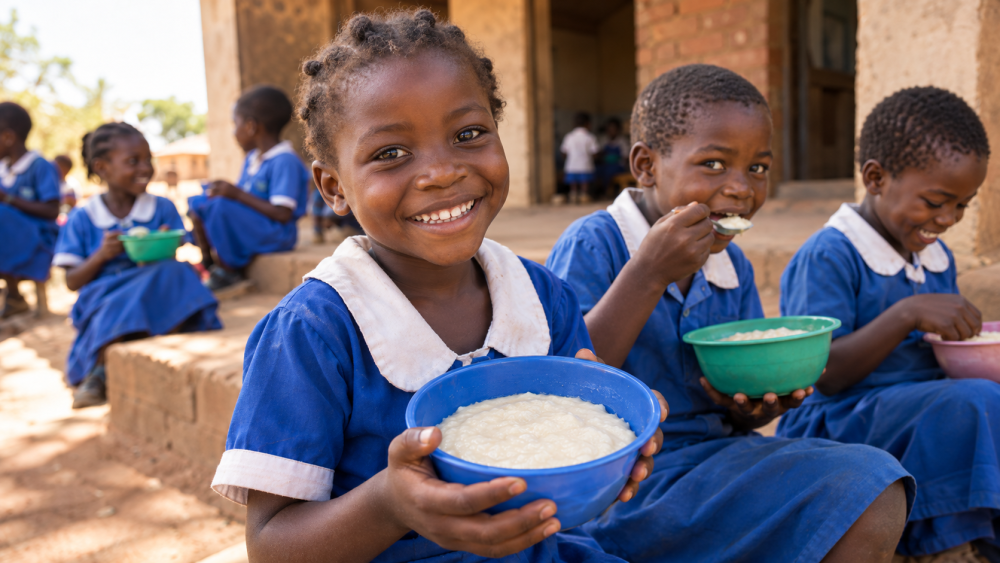
In Japan, breakfast might mean rice, miso soup, or grilled fish. In Malawi, it might be a warm bowl of porridge. But that simple meal can play an important role in a child's education.
Across the world, breakfast looks different depending on where you live. Yet regardless of what is on the menu, food provides the energy children need to participate in everyday activities, including learning.
In Malawi, school feeding programs are helping children access nutritious meals while attending school. One important food in these programs is called Likuni Phala.
Likuni Phala is a fortified porridge commonly associated with school feeding and nutrition programs in Malawi. It is made using a maize-based flour mixture that can be enriched with additional nutrients. The flour is prepared with water to create a warm, filling porridge.
The porridge served through Seibo's school feeding program is made from its own fortified maize-soya flour, produced at Seibo Mills in Malawi. The raw materials are bought from local farmers, so every bowl supports farming families in the community as well as the children who eat it.
Although the meal may look simple, its purpose is important: helping children receive nutrients that support their growth and development. For some students, a meal served at school provides valuable nutritional support during the day.
Think about the last time you tried to study while hungry. Was it difficult to concentrate? Did you feel distracted or tired?
Nutrition and learning are closely connected. Children need adequate food to support healthy development, and hunger can make classroom participation more difficult.
Research and evaluations by the World Food Programme have found that school feeding initiatives in Malawi can improve attendance and help students remain in school. These programs address more than an immediate need for food. They can also help families keep their children engaged in education.
A bowl of porridge cannot guarantee academic success. Children also need qualified teachers, educational resources, supportive families, and safe learning environments. However, reliable access to food can help remove one important obstacle.
For a child learning mathematics, reading, or English, being able to participate in class without the distraction of hunger matters. What seems like an ordinary breakfast can become part of a much larger effort to support education.
Because before children can focus on learning, their basic needs deserve attention.
Beehive Talk is run by Seibo Japan, an NPO that works with its Malawian partner organization, Seibo Maria, to serve a hot school meal to over 22,000 children every day. Every Beehive Talk lesson helps support that work. Find a teacher and book your first lesson →
Please rotate your device for better view